Call us: +84 1985 33 999
 Opening hours: Mon - Sat: 8:00am To 9:00pm



Tree Removal or Pruning? How to Tell Which One a Tree Needs

Mature trees add shade, privacy, and value to a property, and in neighborhoods like those in Salem and the North Shore, they are part of what gives a street its character. They can also become a risk. Deciding whether a tree should be pruned or removed is one of the more difficult calls a homeowner has to make, since removal cannot be undone and delay can sometimes lead to damage. Understanding the warning signs makes the decision clearer.
The Short Answer
Pruning is usually the right choice when a tree is fundamentally healthy but has a few dead, damaged, or overgrown branches. Removal is usually the better choice when the tree itself is dying, structurally unsound, or too close to a home or other structure to be made safe. When there is doubt, a professional assessment is the most reliable way to decide.
When Pruning Is the Better Choice
A tree that is basically healthy can often be improved with pruning, which keeps it safe and attractive for many more years. Pruning is typically suitable when:
- Only some branches are affected. A few dead, broken, or diseased limbs can be removed without harming the rest of the tree.
- Branches are overhanging. Limbs that extend over a roof, driveway, or walkway can be shortened or removed to reduce risk and debris.
- The canopy is crowded. Thinning improves airflow and light, which helps reduce disease and makes the tree more resistant to wind.
- Growth is interfering with the property. Branches touching siding, gutters, or windows can be cut back.
- The tree has good structure. A strong trunk, a balanced shape, and healthy roots suggest the tree can be maintained rather than replaced.
Regular pruning also prevents small problems from becoming large ones. Trees that are maintained on a schedule are usually stronger and safer during storms.
Warning Signs a Tree May Need to Be Removed
Removal is generally considered when a tree presents a risk that pruning cannot fix. Common warning signs include the following.
A Dead or Dying Tree
A tree with no leaves during the growing season, brittle branches that snap easily, or large areas of dead canopy is often in serious decline. Dead trees become more brittle over time and can fall or drop large limbs without warning.
Significant Trunk Damage
Deep cracks, splits, or large open wounds in the trunk can indicate that the tree's structure has been compromised. Bark that is peeling away in large sections, or cavities and hollow areas, are additional concerns.
Fungus, Mushrooms, or Signs of Decay
Mushrooms or fungal growth at the base of a tree or on the trunk often point to internal rot. A tree can look fairly healthy on the outside while its structure is weakened inside.
A Noticeable Lean
A tree that has started to lean, especially suddenly, or one with soil heaving or cracking at the base, may have root failure. A gradual lean that a tree has had for many years is different from a new change, and the second is more urgent.
Root Problems
Exposed, damaged, or cut roots can destabilize a tree. Construction, trenching, and grade changes near a tree are common causes. Roots that are lifting a walkway or pressing on a foundation can also be a concern.
Storm Damage
Severe storms and nor'easters can split trunks, tear away major limbs, or leave a tree leaning and unstable. Trees with this type of damage are often unsafe to leave standing.
Proximity to Structures
A tree growing very close to a house, garage, or utility line may present a risk even when it is healthy, especially if it is tall enough to strike the building when it falls.
Repeated Problems
A tree that keeps dropping large branches, suffers from repeated disease, or has been heavily damaged in the past may not be worth the ongoing risk and expense.
Pruning vs. Removal at a Glance
| Situation | Usually Points To |
|---|---|
| A few dead or broken branches | Pruning |
| Branches over the roof or driveway | Pruning |
| Crowded or dense canopy | Pruning |
| Dead or dying tree | Removal |
| Deep trunk cracks or hollow areas | Removal |
| Fungus or mushrooms at the base | Professional assessment, often removal |
| New or sudden lean | Professional assessment, often removal |
| Severe storm damage | Professional assessment, often removal |
| Healthy tree that is simply too large for its space | Depends on the location and risk |
Why Professional Assessment Matters
Some problems cannot be seen from the ground. A tree may have internal decay, root damage, or structural weakness that is not obvious to the untrained eye. A professional evaluation looks at the whole tree, including the trunk, canopy, roots, and surrounding conditions, and provides an honest recommendation.
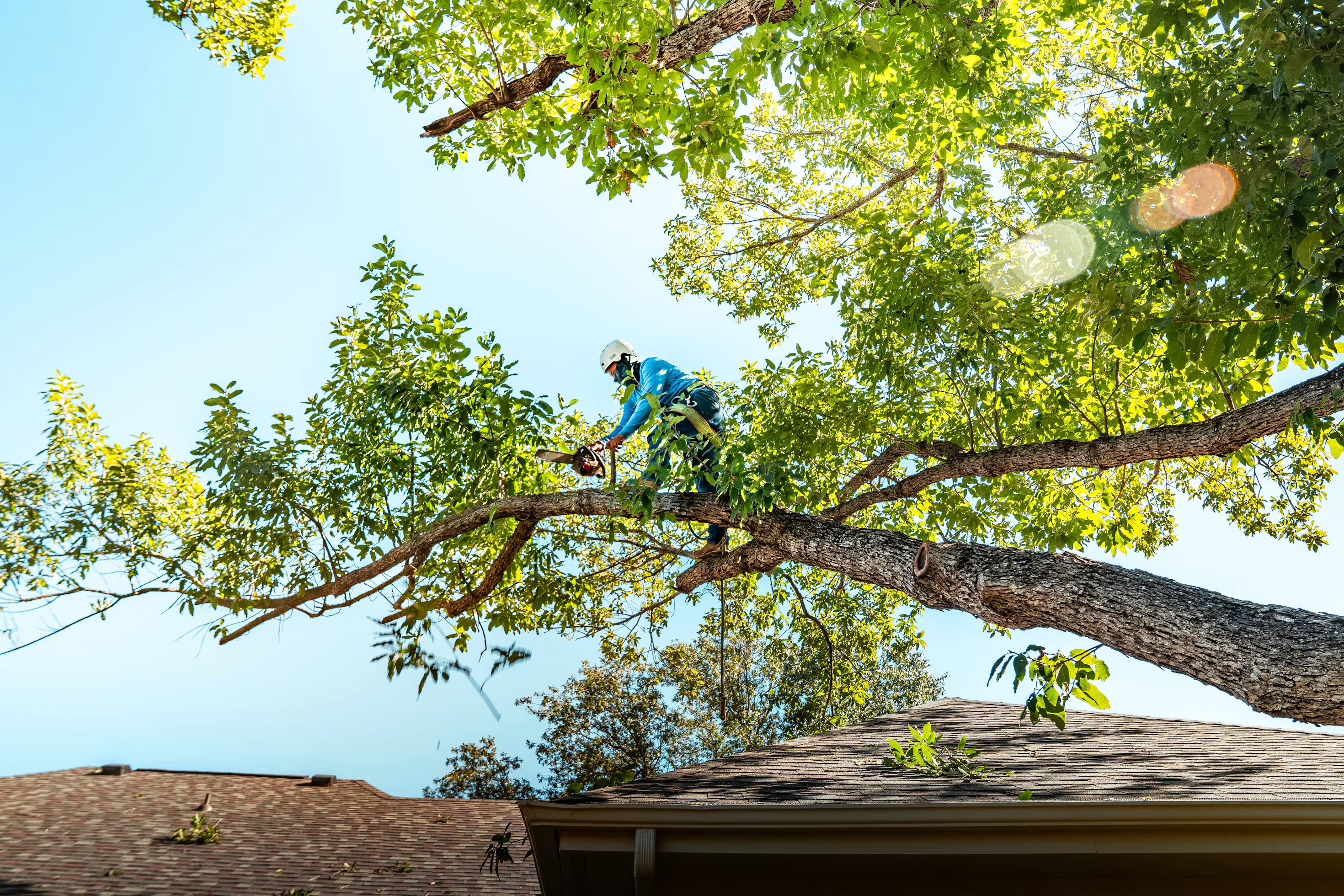
It is also worth being cautious about tree work as a do-it-yourself project. Cutting large limbs or felling a tree involves falling branches, ladders, chainsaws, and often nearby structures or power lines. Any tree or limb near a utility line should be reported to the utility company rather than approached.
Things to Know Before Removing a Tree in Salem
- Local rules may apply. Some communities have regulations or approval requirements for removing certain trees, particularly larger or public shade trees, or trees in protected or historic areas. Checking with the city before work begins is a good precaution.
- Consider the replacement. Removing a large tree changes the shade, privacy, and appearance of a yard. Planting a suitable replacement can help restore those benefits over time.
- Think about stump removal. Stumps can be removed or ground down, depending on what the space will be used for next.
- Plan for cleanup. Debris removal and site cleanup should be part of any tree project.
Frequently Asked Questions
How can I tell if a tree is dead?
A tree with no leaves or buds during the growing season, brittle twigs that snap instead of bending, and bark that is falling off in large pieces is likely dead or dying. A professional can confirm whether the tree is still alive and whether it can be saved.
When is the best time to prune trees in Massachusetts?
Many trees are best pruned while dormant, from late fall through winter, though the right timing depends on the species. Dead or hazardous branches can be removed at any time of year.
Is it safe to leave a damaged tree standing after a storm?
Not always. A tree with a split trunk, major hanging limbs, or a new lean may be unstable and should be looked at as soon as possible. Any tree that is in contact with a power line should be treated as an emergency.
Can a tree with mushrooms at the base be saved?
Sometimes, but mushrooms are often a sign of decay in the roots or lower trunk. A professional assessment can determine how far the problem has spread and whether the tree is still safe.
Tree Management in Salem and the North Shore
Jackson Landscapes has helped homeowners in Salem and the North Shore maintain safe, attractive properties for more than 15 years. Tree removal and pruning are provided to protect homes, keep landscapes healthy, and prepare properties for winter weather. Learn more about tree management, or see how seasonal care fits together in the guide to preparing a lawn for winter.
A free quote can be requested through the contact page or by email at info@jscapes.com.